

Meditations on human worth, responsibility, preparation, competence, presence, and service.
Most articles in Notes from Downrange address a particular question: how to prepare, how to train, how to recognize danger, or how to respond when circumstances become difficult. This one begins farther upstream.
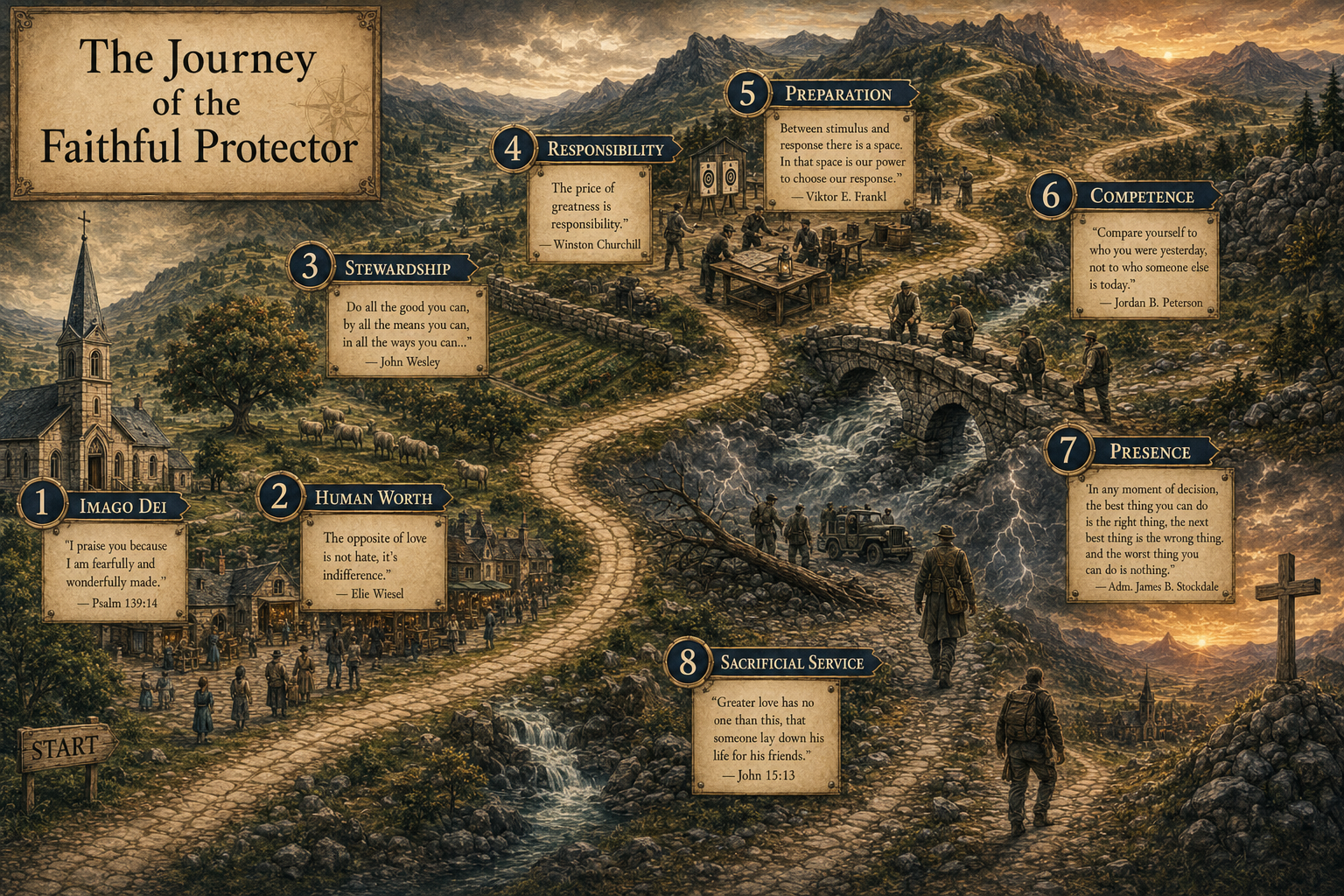
Before we can discuss what a protector should do, we should consider why another person is worth protecting, what has been entrusted to us, and what that trust requires of us. The following eight reflections trace that progression—from the inherent worth of the human person to the willingness to place oneself in service to another.
This is not a technical discussion of firearms or tactics. It is an examination of the convictions that give preparation its purpose.
The Journey
MEDITATION ONE
Imago dei
Made in the Image of God
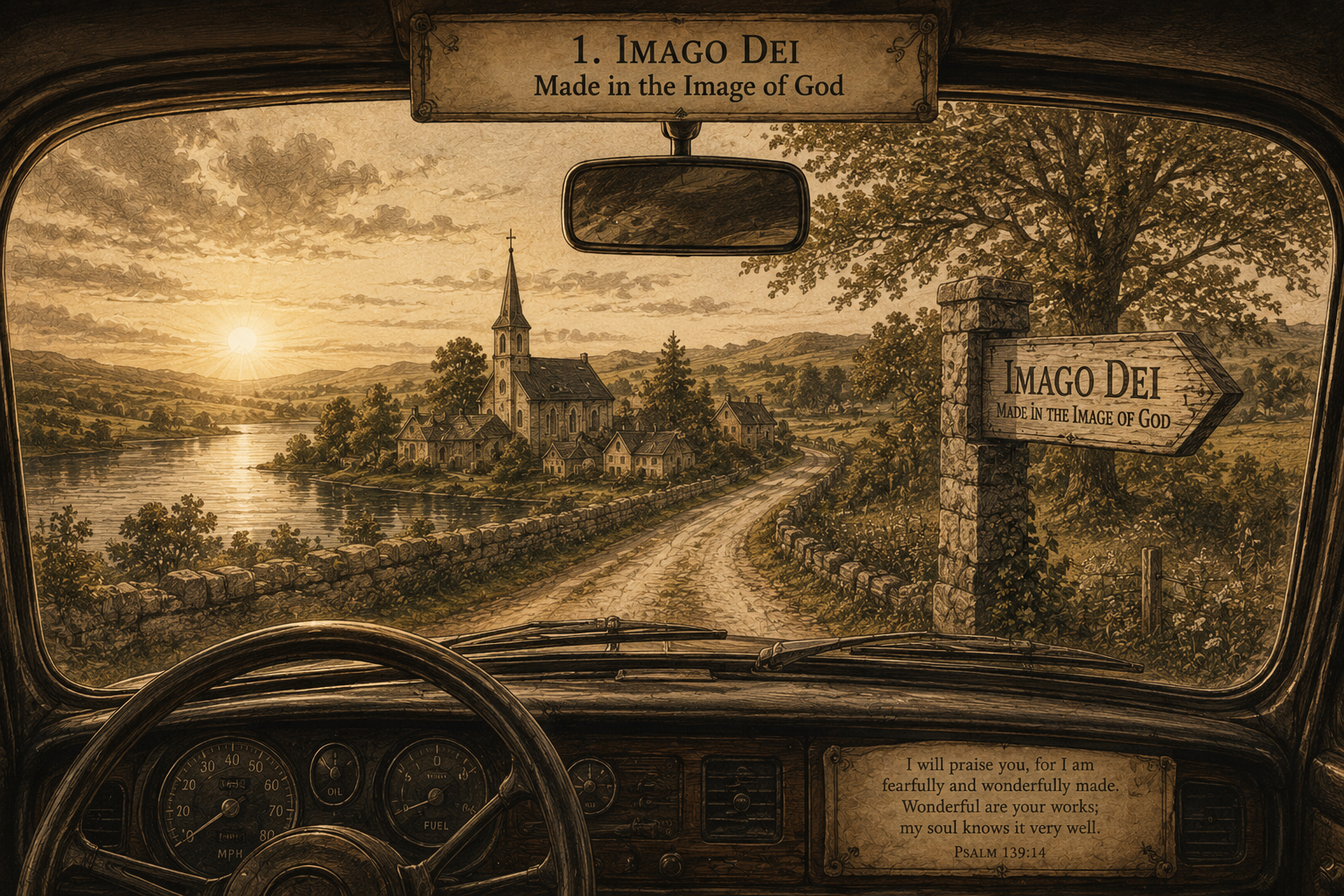
There are some things I believe today that I simply could not have articulated forty years ago. Not because they were hidden from me, nor because I lacked the ability to understand them, but because life has a way of revealing certain truths only after years of paying attention.
Looking back across the people who have entered my life, the conversations we’ve shared, the joys we’ve celebrated, the tragedies we’ve endured, and the responsibilities we’ve carried, I find myself returning to a small number of ideas with increasing frequency. They are neither novel nor complicated. In fact, they are remarkably old. Yet the older I become, the more convinced I am that nearly everything else I believe about people, leadership, responsibility, and the work of preparing ourselves to care well for others rests upon them.
The first is this: Men and women are created in the Imago Dei — in the image of God.
I no longer regard those words as an interesting point of theology to be admired from a distance. They have become something far more personal than that. I’m in the middle of my seventh decade. Over the years I have come to believe that if I understand this truth well, many of life’s most important questions begin quietly answering themselves. If I misunderstand it, I may still speak eloquently about justice, compassion, courage, responsibility, or love, but I will struggle to explain why any of those things ultimately matter.
The opening chapter of Genesis tells us that God looked upon His creation and declared it good. Then, almost unexpectedly, the narrative slows. Humanity enters the story differently from everything that has come before. Men and women are not simply another part of creation. We alone are said to bear the image of our Creator.
I have found myself returning to those verses more times than I can count.
Not because they explain everything I wish to know, but because they give proper context to nearly everything I find worth asking. If we truly bear the image of God, then our value cannot originate in our accomplishments, our intelligence, our appearance, or our usefulness. It cannot be granted by society or withdrawn by culture. It precedes every success and survives every failure because it rests, not in us, but in the One whose image we bear.
That conviction has quietly become the foundation beneath everything else I believe.
MEDITATION TWO
Human Worth
Every Person Bears Dignity
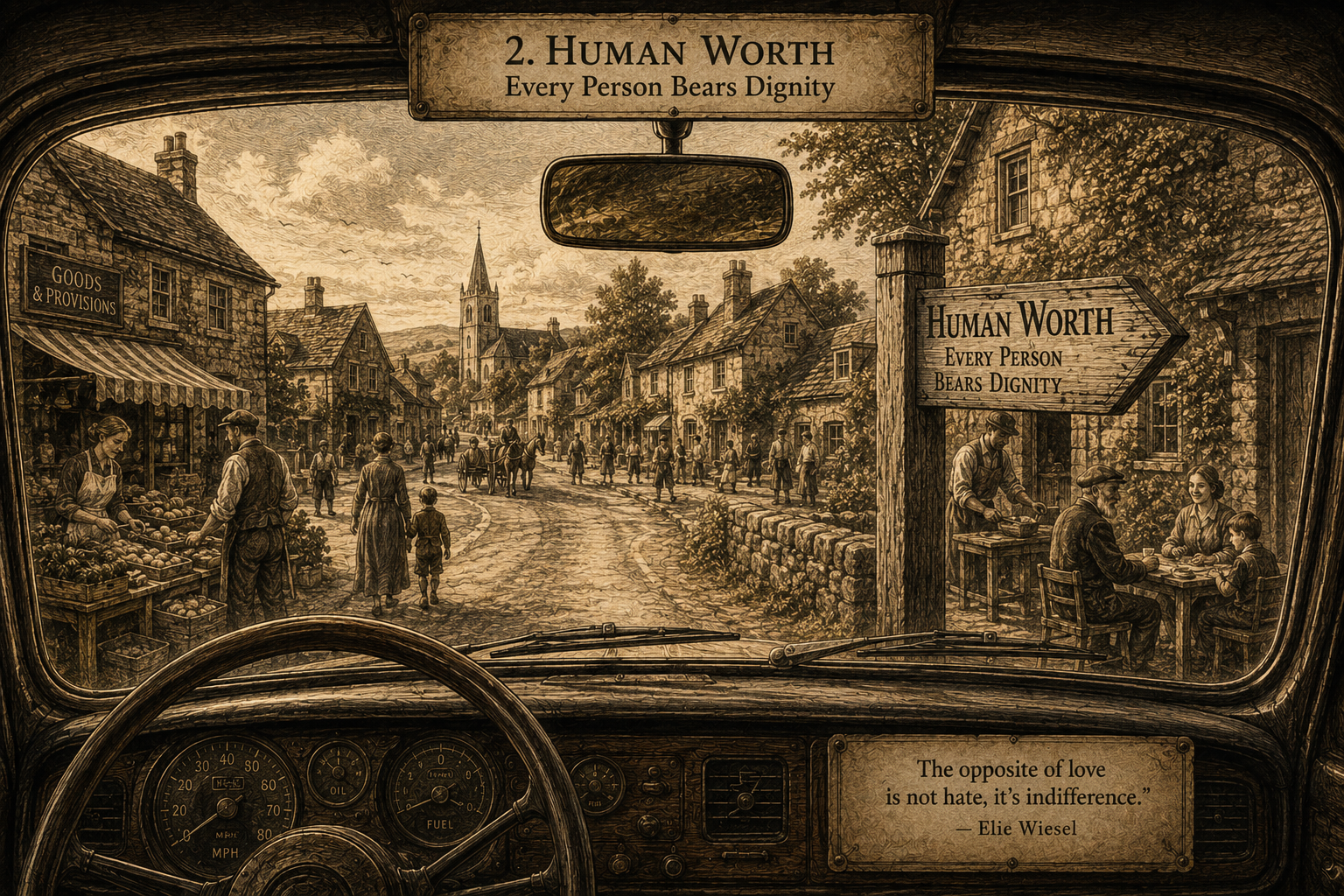
There are moments in life that divide it into “before” and “after.” For me, one of those moments came the day my first child was born.
When the nurse placed my daughter, Victoria Grace, into my arms, the world seemed to pause. I remember standing there overwhelmed by emotions I could neither separate nor fully describe. Love. Joy. Gratitude. Wonder. Fear. They all arrived at once with such intensity that, for a moment, I could scarcely breathe.
What surprised me most, however, was that I never questioned whether this tiny little girl possessed immeasurable worth. She had accomplished nothing. She owned nothing. She had spoken no profound words, earned no degree, built no career, received no recognition. She had done nothing by which our culture ordinarily measures significance. Yet as I held her, none of those things seemed remotely relevant. I realized that the value, the preciousness, the worth of what… of who… I was holding was beyond measure. It seemed almost supernatural.
It has often occurred to me that nearly every parent understands that moment instinctively. We don’t arrive at it through careful reasoning. No one needs to persuade us that the child in our arms is precious. Somehow, we simply know.
It would take me years to understand why I knew. Genesis had quietly answered the question long before I ever asked it.
If men and women truly bear the image of their Creator, then our worth has never depended upon what we accomplish, what we possess, what others think of us, or even what we are capable of contributing. Those things may shape the course of our lives, but they cannot determine our value. That has already been spoken by the One whose image we bear.
As the years have passed, I have found that truth becoming more, not less, compelling. I have stood beside hospital beds where illness had stolen strength but not dignity. I have watched age slowly erase memories without diminishing the love of those gathered around the bed. I have seen remarkable accomplishments quietly fade into history while the worth of the person remained untouched.
Perhaps that is because human worth has never been ours to manufacture. It has only ever been ours to recognize.
MEDITATION THREE
Stewardship
Faithful Management of What Is Entrusted
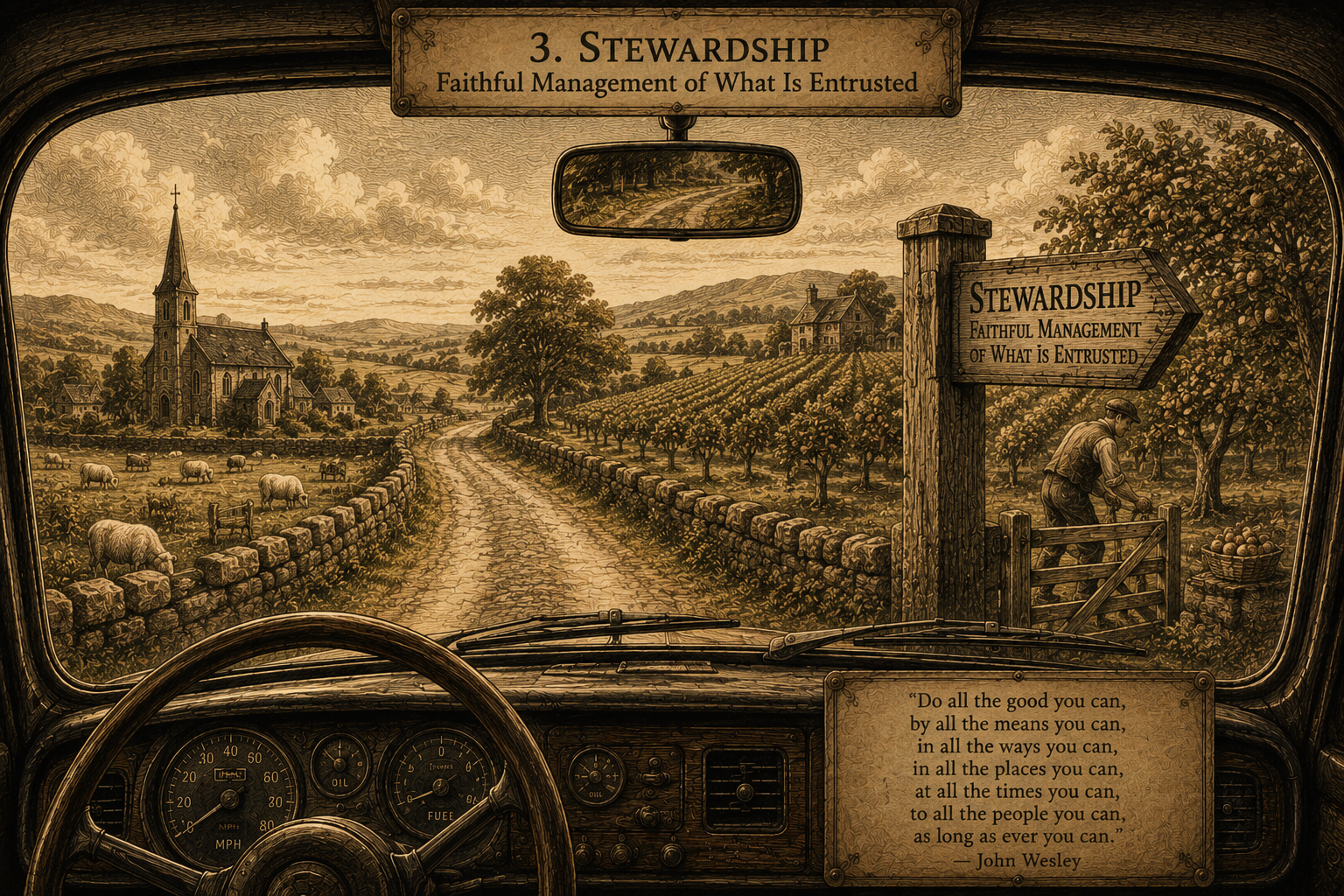
If holding Victoria for the first time taught me anything, it was not simply that she possessed immeasurable worth. It also confronted me with a realization that has only grown clearer with the passing years.
She wasn’t mine. At least not in the way I first imagined.
Like most fathers, I naturally spoke of "my daughter". I still do. There is nothing improper about those words. They describe a relationship I cherish more deeply than I can express. Yet as I have reflected upon them over the years, I have come to understand that the little word my can quietly mislead us. It suggests ownership, when what we have actually been given is something far more beautiful.
We have been entrusted.
That realization has gradually changed the way I think about nearly everything. My wife. My family. My health. My abilities. My students. My friendships. My business. Even my own life. I still speak of them as “mine,” but I no longer believe they belong to me in the ultimate sense. They are gifts, placed into my hands for a season by the One from whom every good gift comes.
Somewhere along the way, I realized that Scripture had language for what I was beginning to understand.
Stewardship. The word itself carries a quiet humility. A steward does not possess; he cares. He does not exercise authority on his own behalf but serves on behalf of another. Ownership never changes. Responsibility does. God never relinquishes ownership of His Creation, yet He continually entrusts portions of it to our care.
I have come to see that as one of the great dignities of being human.
The Creator of the universe could have chosen to accomplish His purposes without us. Instead, He invites us to participate in them. He entrusts children to parents, patients to physicians, students to teachers, neighbors to communities, and countless ordinary moments to ordinary people. Stewardship is not merely careful management. It is God’s invitation to reflect something of His own character through the way we care for what He has placed within our reach.
The older I become, the more convinced I am that love is what makes stewardship possible. Duty may persuade us to do what is required, but love quietly changes the heart from which those actions flow. We care for what has been entrusted to us not because we fear failing, but because we have grown to love both the Giver and the gifts.
It is difficult for me to remain with that thought very long before another question begins to emerge.
If so much has been entrusted to my care…
What does faithfulness now require of me?
MEDITATION FOUR
RESPONSIBILITY
The Burden That Shapes Greatness
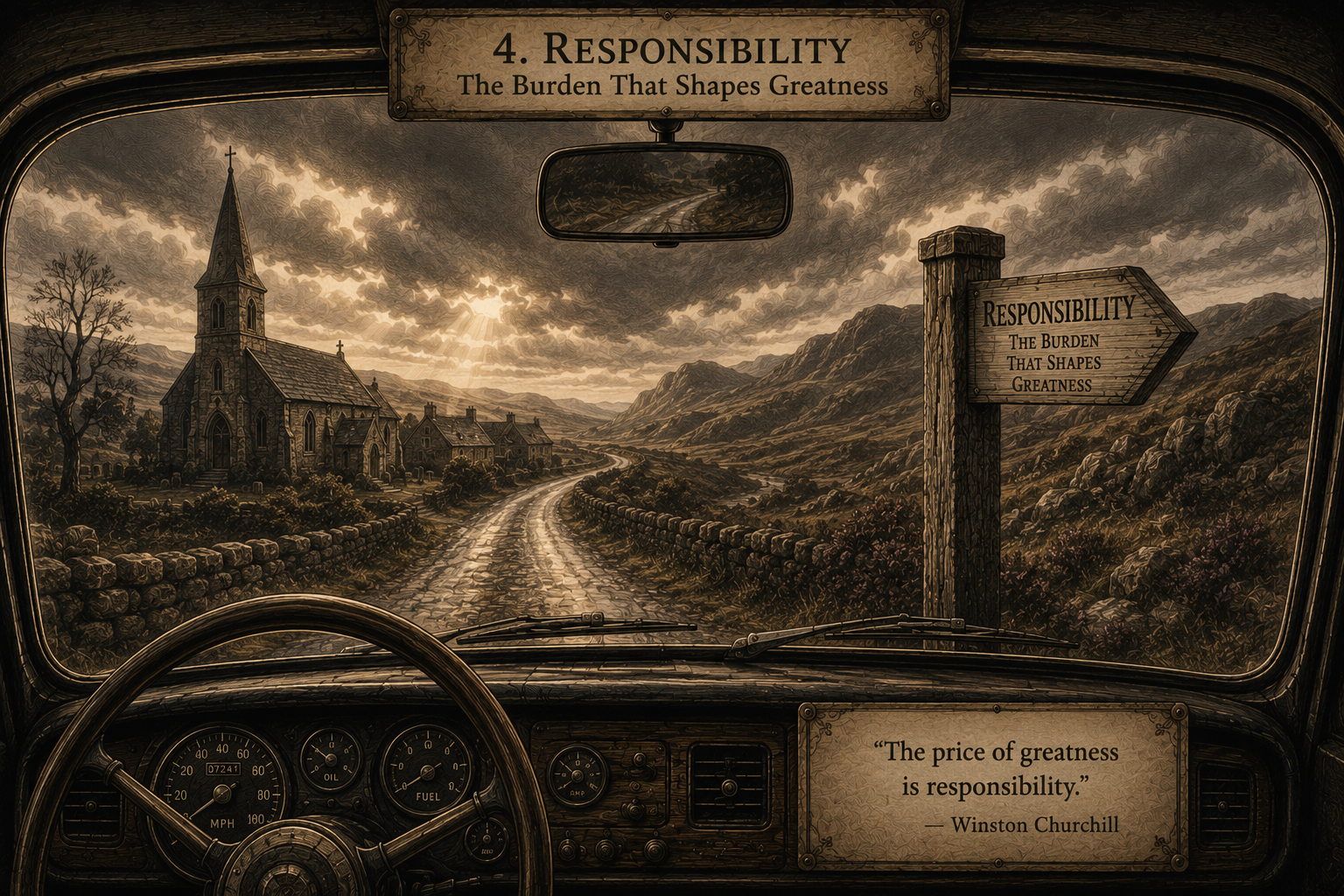
There are seasons of life when we gradually discover new responsibilities, almost without noticing they have arrived. Marriage was not one of those seasons for me.
It happened all at once.
Standing before God, surrounded by family and friends, I made promises that seemed entirely natural to me at the time. I loved my wife deeply and never doubted the sincerity of those vows. Looking back, however, I can see that I understood far less about them than I imagined. If I am being truthful, marriage revealed most of my foolishness. There are many things I wish I had understood sooner, and many things I would gladly do differently if life granted me that privilege.
Yet even in the midst of that immaturity, something profound had taken place. A new family had come into existence.
Until then, I had thought of responsibility in fairly predictable—even honorable—ways. I believed a man should work hard, keep his word, pay his debts, and become someone others could depend upon. Those convictions have never left me. They simply proved to be incomplete.
Marriage quietly taught me that responsibility is never merely about managing my own life well. It is about willingly ordering my life for the good of another.
That realization would deepen over the years. It certainly did when Victoria and, later, William entered our lives. But fatherhood did not create it. It simply expanded what covenant had already begun to teach me.
Looking back, I don’t think responsibility first entered my life as an obligation. It entered as a consequence of love. Once another person’s flourishing had become deeply important to me, I found myself asking questions I had never asked before. Not, “What do I want?” but, “What is now mine to do?”
That question has continued to follow me.
I have seen sons and daughters quietly become caregivers to the very parents who once cared for them. I have watched neighbors appear at one another’s doors carrying meals after a funeral, then return again the next day after the crowds had disappeared. I have sat beside friends whose presence in a hospital room spoke far more eloquently than any words they might have offered. None of those moments looked particularly dramatic. Yet each revealed the same quiet truth. Love had accepted responsibility for another person’s good.
Love does not stop at recognition. Once it sees something precious, it begins asking, “What is mine to do?” I have come to believe that this is where responsibility begins. And once that question has been honestly asked, another one follows almost immediately.
If I truly desire the flourishing of those entrusted to my care, how can I care for them well?
As I have reflected on these things over the years, another realization slowly began to emerge.
For a long time I found myself captivated by the beauty of God’s design. Human beings created in His image. Worth bestowed rather than earned. A world entrusted to our care. The privilege of participating in His work through faithful stewardship. The older I become, the more I find myself returning to these truths.
Yet life has a way of gently asking another question.
If the world was created so beautifully… why do the things we cherish seem so vulnerable?
I don’t remember arriving at an answer all at once. It was something I gradually came to accept as I watched life unfold around me. Children become ill. Marriages struggle. Storms destroy homes. Good people bury those they love. Sometimes the source of our suffering is simply living in a world that no longer functions as it once did. Sometimes it is the result of human choices—our own or someone else’s. Either way, the gifts God has entrusted to us are often fragile.
I have come to believe that faithful stewardship requires us to hold both realities at the same time. The world remains breathtakingly beautiful. It is also deeply broken. Neither truth cancels the other. And it was only when I began holding both together that I finally started to understand why preparation matters.
MEDITATION FIVE
Preparation
Deliberate Readiness for the Journey Ahead
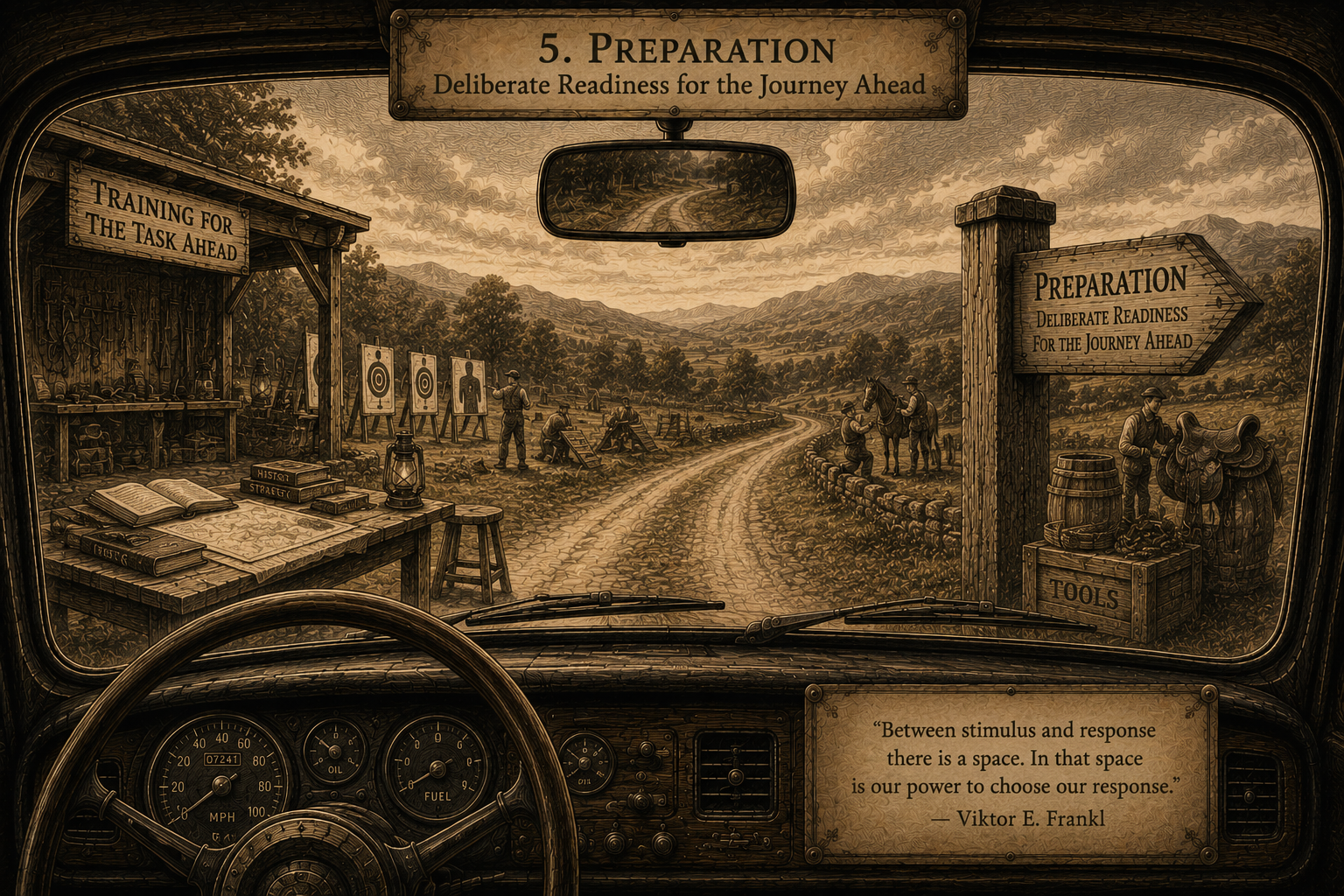
I don’t remember deciding to become a person who prepared.
In fact, if I’m being honest, I spent a good deal of my younger years assuming that tomorrow would probably look much like today. Most of us do. We make plans. We establish routines. We quietly assume that life will continue on much as it always has.
Most of the time, it does. But not always. The older I become, the more clearly I see that the America of my childhood is not the America in which I now live. Life, whether personal or cultural, rarely remains as it was.
Life has a way of reminding us that the future arrives on its own timetable, not ours. Sometimes it brings unexpected joy. Sometimes it brings opportunities we never imagined. Sometimes it arrives carrying burdens we would never have chosen. The future has never seemed particularly concerned with my timetable.
That realization gradually changed the way I thought about preparation.
I no longer saw it as something driven by fear, nor as the peculiar habit of unusually cautious people. Instead, I began to see it as one of the quiet expressions of faithful stewardship. If I truly believe that people, relationships, opportunities, and even moments have been entrusted to my care, then preparing for tomorrow, both a good tomorrow and a bad one, is one way of honoring them today.
Preparation, I have found, is remarkably ordinary.
Parents prepare for children long before they arrive. Farmers prepare fields long before the harvest. Musicians practice pieces they hope someday to perform beautifully. Craftsmen sharpen tools before beginning their work. We instinctively understand that many of the things worth doing well require preparation long before they require performance.
Why should faithful stewardship be any different?
Over the years I have also discovered that preparation is surprisingly humbling.
It accepts that I will not rise to the occasion simply because the occasion is important. It refuses the comforting illusion that good intentions are an adequate substitute for readiness. It quietly acknowledges that tomorrow deserves more from me than confidence. It deserves whatever faithfulness I can offer today.
Perhaps that is why preparation has become less about anticipating specific events and more about becoming a certain kind of person.
The kind of person who has already decided what matters. The kind of person who has already begun doing the quiet work before anyone else notices. The kind of person who, when tomorrow finally arrives, is free to devote his attention not to himself, but to those who have been entrusted to his care.
Looking back, I no longer think preparation is primarily about the future. It is about faithfulness in the present. Whatever tomorrow may bring, faithful preparation leaves us better able to embrace its joys with gratitude and face its troubles with courage.
MEDITATION SIX
Competence
The Fruit of Disciplined Effort
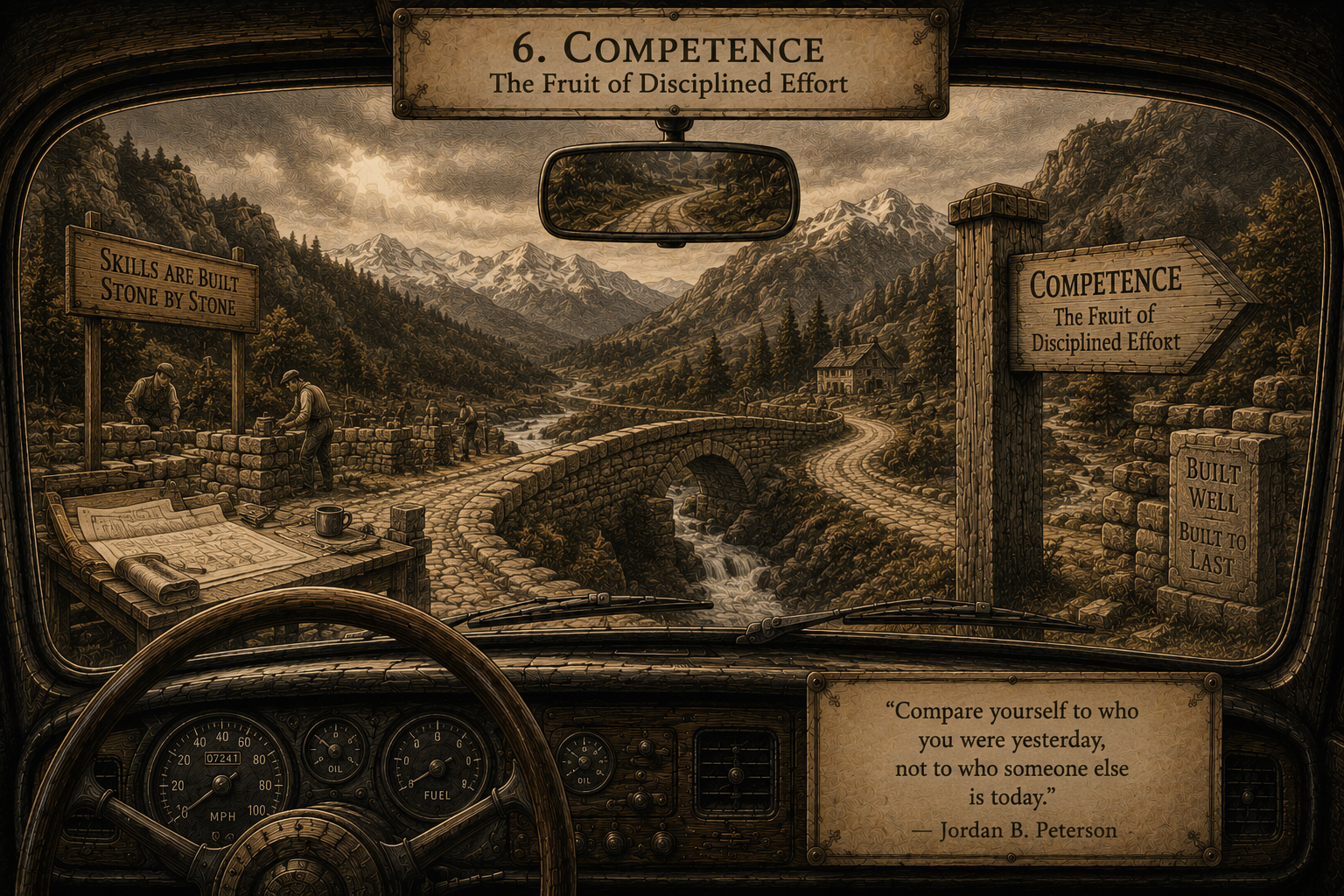
For many years, I thought preparation and competence were nearly the same thing.
They are closely related, of course. Preparation turns our attention toward what may be required of us. It encourages us to learn, to practice, to gather what may be needed, and to begin shaping our lives before circumstances make demands upon them.
But preparation is still a beginning. Even the word itself points backward toward what comes before—the preliminary work of making ready and setting things in order. I have always loved words, and this one seems unusually honest about its limits.
Competence develops more slowly, as knowledge is tested, corrected, practiced, and eventually made dependable. It is not simply knowing what ought to be done. It is becoming able to do it when the moment is no longer theoretical.
I came to understand this distinction more clearly one afternoon while driving through rush-hour traffic.
A teenage driver clipped the rear of a tractor trailer. His vehicle crossed two lanes, rolled twice, and came to rest upside down in the median. I stopped, retrieved the trauma equipment I carried in my trunk, and went to him.
There was little time to reflect upon what kind of person I hoped to be in such a moment. There were immediate questions to answer. Scene secure and safe? Rapid blood loss? Was he breathing? Mental status? Any skeletal deformations? Localize any injuries. Was spinal immobilization required? What needed to be done, and what might make things worse?
The emergency-medicine training I had received did not make the scene orderly. It did not remove the danger or guarantee the outcome. It did, however, give me a way to proceed, allowing training that had once taken place in classrooms and controlled exercises to become useful amid broken glass, twisted metal, an visibly distressed truck driver at my side, and traffic moving past us at 80 miles per hour.
I remained with the young man until emergency personnel arrived.
Looking back, I do not remember feeling particularly brave. I remember paying attention. I remember working through what I had been taught and what I now teach others, while trying not to allow the urgency of the situation to outrun my judgment.
That experience helped me understand that competence is often quieter than confidence. Confidence concerns what I believe about myself; competence concerns what I am actually able to do. The two sometimes travel together, but not always. A person may speak with certainty and still be unprepared for the demands before him, while another may carry considerable ability without feeling any need to announce it.
Competence is usually formed far from the moment in which it becomes visible. It grows through repetition, through mistakes made where mistakes can still be corrected, through instruction received from people who know more than we do, and through the discipline of returning to something after the novelty has passed. It also requires the humility to discover that what once seemed simple contains more difficulty than we first imagined.
This has been true in nearly every worthwhile skill I have attempted to learn or teach.
A student may understand a principle after hearing it once, yet require many repetitions before the body can perform it without hesitation. A teacher may know his subject well, yet need years before he can recognize what a particular student does not understand. A person may purchase equipment for an emergency, yet remain unable to use it when frightened, tired, or under pressure.
Possession, familiarity, and intention may all have value, but none of them is competence.
Even experience, by itself, may not be enough. We can repeat the same error for many years and become deeply experienced in doing something poorly. Competence requires reflection as well as repetition. It asks us to notice what is not working, to accept correction, and to change.
Perhaps this is why genuine competence tends to produce humility rather than pride. The more carefully I learn something, the more aware I become of its limits and of my own. I begin to recognize the circumstances for which I am prepared and those for which I am not. I become less eager to offer certainty where judgment is required, and I learn when to act, when to wait, and when someone else is better equipped to take my place.
That humility is not weakness. It is part of becoming dependable.
The people entrusted to our care do not need us to imagine that we can do everything. They need us to know what we can do well, to continue improving it, and to recognize when the situation requires more than we possess.
Preparation begins with the willingness to take tomorrow seriously. Competence is what may gradually grow from that decision when it is followed by disciplined effort.
It cannot guarantee that we will be present when the moment arrives. A person may possess considerable ability and still hesitate, withdraw, or choose not to become involved.
But when Presence finally asks whether we will bring ourselves into the moment, competence determines something important about what we are able to bring.
MEDITATION SEVEN
Presence
Being There When It Matters Most
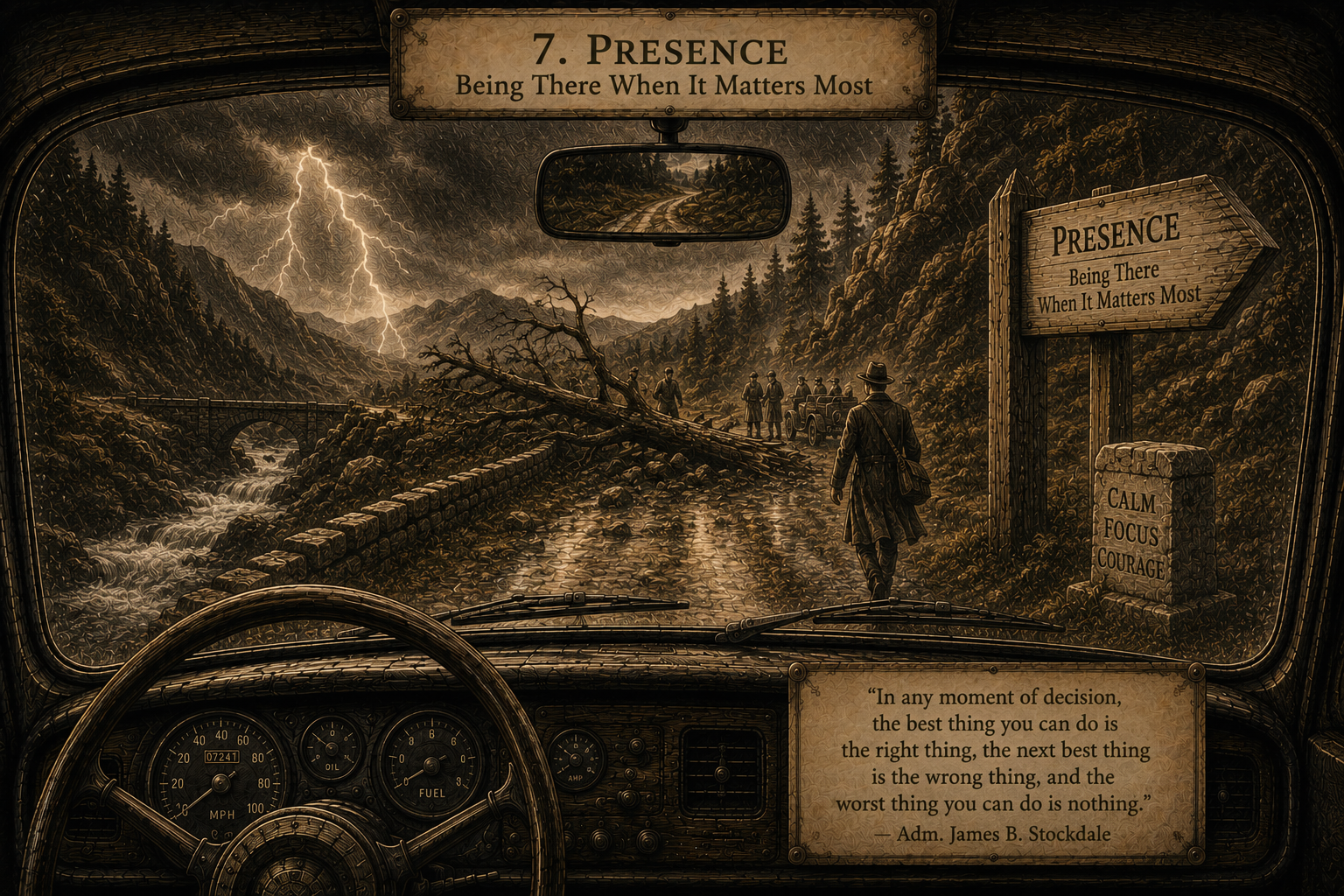
When I was twelve years old, hockey was still a very large part of my world.
I had the privilege of playing in one of Canada’s premier youth hockey leagues. Looking back now, I realize I had been given abilities that many young athletes never receive. I worked hard, loved the game, and dreamed the dreams that young boys often do.
One afternoon during practice, our coach—a semi-professional player with a blistering slapshot—skated to center ice, wound up, and drove a puck directly at me. To a twelve-year-old goalie, it looked like a bullet.
I remember standing my ground.
The puck struck my glove so hard that my hand tingled for the next hour. I made the save, but I have often wondered whether something else happened that afternoon as well. I sometimes wonder whether, long before I understood such things, I quietly learned that standing in the place where I was needed could be painful.
I don’t know. Perhaps I have simply attached too much significance to one forgotten afternoon.
What I do know is that, although I remained a capable athlete, something often kept me from bringing all that preparation into the moments that mattered most. By the time I was playing college soccer, I could see it in other young men, even if I could not yet recognize it in myself. The really good ones seemed to arrive at decisive moments differently than I did. They committed themselves fully. They placed themselves where the game required them to be. They accepted the possibility of failure, of pain, even of embarrassment, and yet they remained completely engaged in the moment.
It would take me many years to understand that what I was observing had very little to do with sports.
Preparation had made them capable. But something else made them present.
As life unfolded, I began to see that the same truth quietly appears almost everywhere.
A physician steps into an examination room where difficult news must be given. A firefighter walks through smoke toward someone everyone else is fleeing. A neighbor crosses the street after the funeral, not on the day everyone else comes, but a week later, when the house has become painfully quiet. A father hears something go bump in the night and rises from his bed while the rest of the family remains behind him.
Each of those moments asks the same question.
Not, “Are you capable?” That question has already been answered.
The question is, “Will you bring everything you have become into this moment?”
I have come to believe that this is what Presence really is.
It is more than being physically nearby. It is more than courage, though courage is certainly part of it. Presence is the quiet decision that when faithfulness requires me, I will not withhold myself. My preparation. My competence. My attention. My strength. My compassion. My resolve. I will bring all of them into the moment because the person before me is worth nothing less.
Looking back now, I can see that the stakes have changed.
At twelve years old, the cost of Presence was a bruised hand, a goal scored, or the embarrassment of letting Coach get one by me.
Life eventually asks much harder things.
One day the person depending upon my presence is no longer a teammate.
It is my wife… my children… a student… a stranger… perhaps even an entire community.
When that day comes, Presence is no longer measured by whether I remained in front of a hockey puck. It is measured by whether I remain where faithful stewardship requires me to be.
Presence eventually asks one more question:
“If remaining there should cost me everything… will I remain?”
MEDITATION SEVEN
Sacrificial Service
A Life Given for Others
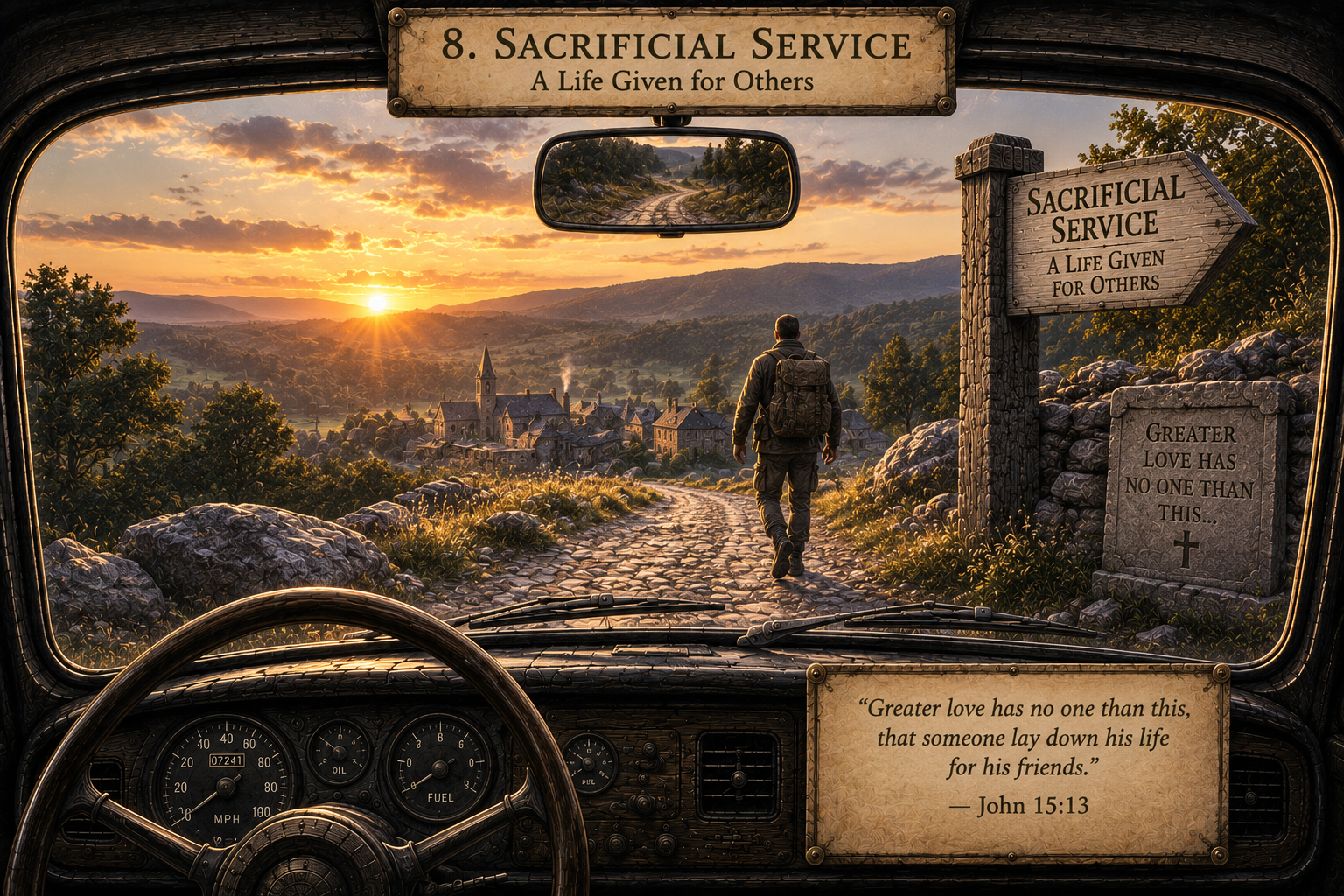
You have been willing to walk with me through these pages, and for that I am grateful. Along the way, I have shared some of the truths that have gradually revealed themselves to me and quietly reshaped my life. We have reflected together upon the image of God, the infinite worth of every human life, the privilege of stewardship, the sacred responsibilities born of love, and the quiet work of preparing ourselves to care well for those entrusted to us. If these reflections have resonated with you from time to time, then perhaps the journey we have taken together has not been mine alone.
At some point, however, every journey reaches a place where reflection gives way to reality. We spend years thinking about the kind of people we hope to become, seldom realizing that life itself will eventually ask the question for us. That moment rarely arrives in the form or at the time we expected. It simply comes—sometimes quietly, sometimes with a terrifying suddenness that leaves no time to become ready. In that instant, our good intentions are no longer enough. What matters is not what we admire, but what we have become.
Most of the responsibilities we carry will never require extraordinary sacrifice. They are fulfilled in remarkably ordinary ways: keeping promises, extending forgiveness, remaining patient, working faithfully, caring for those who can no longer care for themselves, loving our spouses, raising our children, and showing up for our friends. It is in those ordinary moments that love does most of its work. Yet we also live in a world that has been deeply wounded. Much of its brokenness comes without anyone causing it. Illness, loss, disappointment, and death visit every life eventually. But there are other moments when brokenness wears a human face. There are men and women who willingly destroy what God intended to flourish. They abuse, exploit, terrorize, and sometimes kill. We do not seek such moments, and wisdom teaches us to avoid them whenever we can. But neither are we always free to avoid them.
That is why I have come to believe that preparation is ultimately about much more than competence. Competence matters greatly, but it is only one part of the journey. The deeper question is whether, when faithful stewardship finally asks something difficult of us, we will be willing to give it. Sometimes the answer costs us convenience. Sometimes it costs us comfort. Occasionally it costs us a cherished dream. And for a very small number of ordinary people throughout history, it has cost everything. Sacrificial service is not the pursuit of suffering, nor is it the pursuit of conflict. It is simply the recognition that there are things more precious than ourselves, and that love, if it is truly love, cannot remain indifferent when those things are threatened.
Our shared journey through these reflections ends here, but your own journey does not. Nor, for some of us, will this be the last stretch of road we travel together. The road continues, and none of us walks it perfectly.
If the day ever comes when someone else’s well-being depends upon you, what kind of steward do you hope that person finds?
Who has already been entrusted to your care today?
And what will love ask of you tomorrow that it is inviting you to begin preparing for today?
If somewhere along that road you decide that you would value companions who share these convictions—people committed to the long, often difficult, always worthwhile work of becoming faithful protectors—then Intrepid stands ready to walk beside you.
Grace and Truth and Peace to you, and those whom you love,

R. Ian Davis
Intrepid Firearms Academy
0 Comments